
Filmmaking
AI Lighting Guide
A practical AI lighting guide for cinematic image and video generation, covering golden hour, soft light, studio light, sunset, cloudy scenes and night lighting.
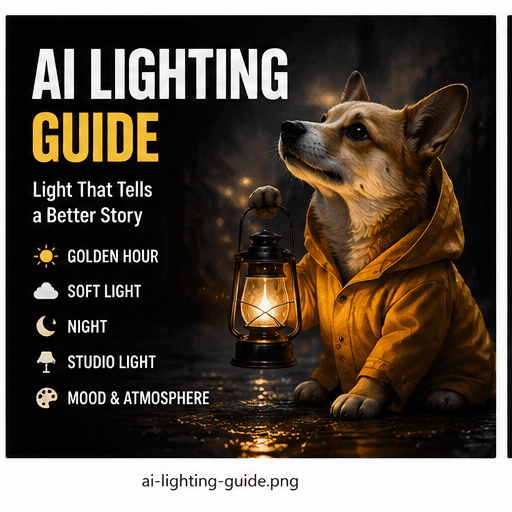
Quick Verdict
This quick verdict summarizes where the tool or workflow fits best inside a practical FourFeetz production pipeline.
Best Overall
Golden hour
Best for Characters
Soft light
Best for Control
Studio light
Best Mood
Sunset and night
Introduction
Lighting is one of the fastest ways to make AI images and videos feel cinematic. It controls emotion, continuity, subject separation and perceived production value.
In AI production, lighting is also a consistency tool. If every scene changes lighting style, the character and world can feel unstable.
Golden Hour
Golden hour is the easiest premium look for animal characters, travel stories and emotional scenes. It adds warmth without needing complicated prompt language.
Best Use
Journey scenes, quiet roads, warm endings and character introductions.
Prompt Language
Warm sunlight, long shadows, soft golden rim light.
Soft Light
Soft light is ideal for character portraits because it reduces harsh shadows and keeps facial details readable.
Studio Light
Studio light gives control. Use it for character sheets, product-like presentations, thumbnails and clean educational visuals.
Sunset
Sunset creates emotion and closure. It works well for final scenes, reflective moments and social video covers.
Cloudy
Cloudy light is useful for realism and continuity. It can make scenes feel natural without strong shadows or dramatic color shifts.
Night
Night lighting is powerful but risky. AI models can lose character detail, introduce noise or hide important features unless the prompt defines practical light sources.
Lighting Prompt Tips
Choose one lighting style per scene. Combine lighting with lens and camera language only when it supports the shot.
Copyable prompt block
Soft golden-hour light, warm rim light on the character, natural shadows, cinematic 35mm lens, shallow depth of field, consistent face, no harsh contrast.Common Mistakes
Lighting mistakes are usually continuity mistakes. Changing mood too often makes a sequence feel generated instead of directed.
Mixed Lighting
Golden hour, studio and night language in one prompt creates conflict.
Too Dark
Important character features can disappear.
Harsh Contrast
Strong shadows can distort faces and fur.
No Light Source
Night scenes need lamps, moonlight or practical light.
Recommendations
Build a small lighting vocabulary and reuse it. FourFeetz keeps lighting simple so character identity and emotional tone remain stable.
Use Golden Hour
Best default for warm cinematic stories.
Use Soft Light
Best for portraits and character sheets.
Fix Lighting Per Scene
Avoid changing the light between connected shots.
Review on Mobile
Most viewers see the final result on phones.
Final Score
Lighting is not a finishing detail. It is production direction.
Final Scores
FourFeetz practical score
Golden Hour
5/5
Soft Light
5/5
Studio Light
4.5/5
Cloudy
4/5
Overall
4.7/5
Related Articles